lined link to go to subject)
 - Contents
Chapter 1. Vision
System Design
Chapter 2. Biological Eye Designs
Chapter 3.
Eye
Design
Illustrations
A.
Plant
light sensing
1.
Grass, simple vines,
and stems
2.
Flowers
B.
Lower
animal eyes
1.
Flatworms
2.
Clams and Scallops
3.
Nautilus
4.
Shrimp
5.
Crab
6.
Octopus and
giant squid
7.
Spiders
8.
Scorpions
8.
Brittle Star
C.
Insect
eyes
1.
Bees
2. Dragonflies
3. Butterflies
4.
Flies
5.
Ants
6.
Moths
7.
Beetles
8.
Wasp
D. Fish
eyes
1.
Shark
2.
Flounder
3.
Four-eyed fish
E.
Amphibian
eyes
1. Frog
2.
Salamander
F.
Reptile
eyes
1. Boa
constrictor
2.
Rattle
snake
3.
Lizard
4.
Turtle
5.
Crocodile
and
alligators
G. Bird
eyes
1.
Eagles
2.
Hummingbirds
3. Owls
4.
Ostrich
5.
Cormorants
H.
Mammal
eyes
1.
Whales
2.
Elephants
3. Lions,
tigers, and
other cats
4.
Monkeys
5. Rats
and mice
6. Bats
7.
Tarsier
I.
Human
eyes
1. Iris
2. Lens
3.
Retina
Chapter
4. Eye
Reproduction
Chapter
5. Optical
Systems
Design
Chapter
6. The Eye Designer
Related
Links
Appendix
A - Slide
Show & Conference Speech by Curt
Deckert
Appendix
B -
Conference Speech by Curt Deckert
Appendix
C -
Comments From Our Readers
Appendix
D -
Panicked
Evolutionists: The Stephen Meyer Controversy
Chapter 3
Section D
- Prev Page
Go
to Chapter Links
-  Next Page
-
Next Page
- 
(Click on PICTURE IN TEXT to bring up LARGE PICTURE)
3. EYE DESIGN ILLUSTRATIONS
D. Fish eyes
Fish have fairly complex
camera eyes, some of which are extremely elegant and versatile in
design. Fish eyes need to be highly developed, since many are
sight-feeders rather than smell-feeders. Some have the ability to see
both above and below the water. They have good spatial resolution and
color vision. Fish have flattened corneas, rather than the higher
curvature corneas of land animals, because of the need to match the
different index of refraction requirements of water rather than air.
Even if the fish eye’s cornea does not contribute to overall
optical correction, it still acts as a window to the water. Water
deeper than 15 meters acts as an optical filter to exclude most
infrared and ultraviolet light, so there is less need for most fish to
have extended color vision.
1.
Shark
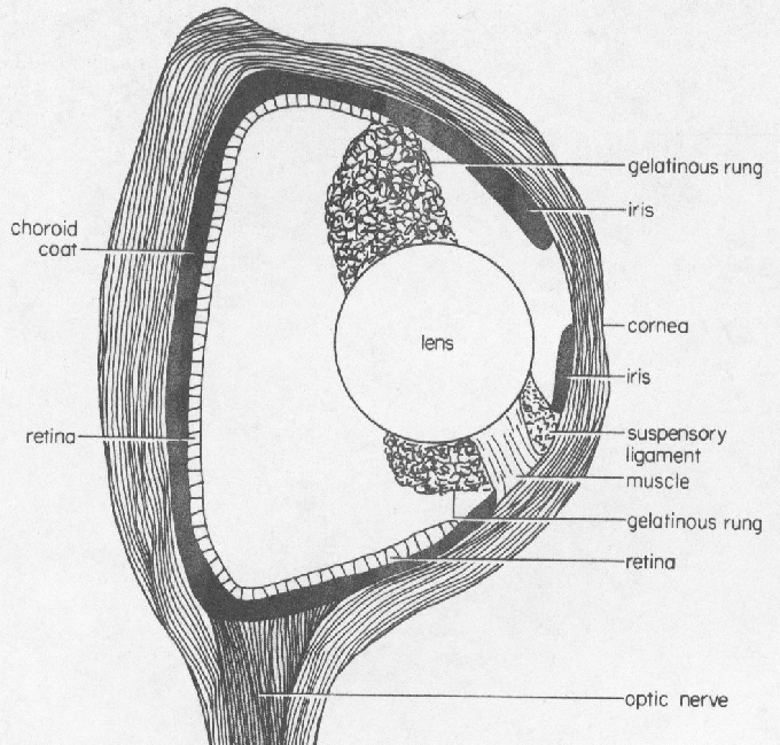
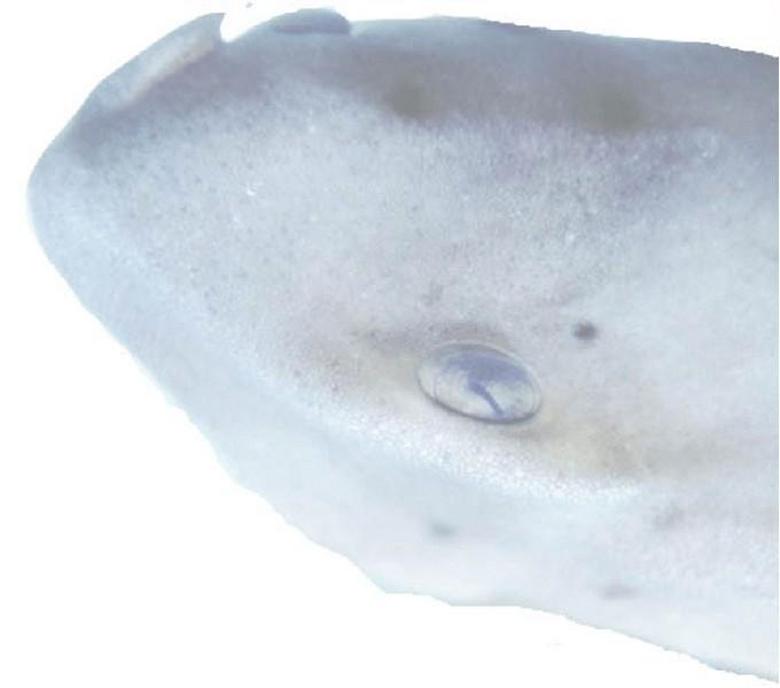
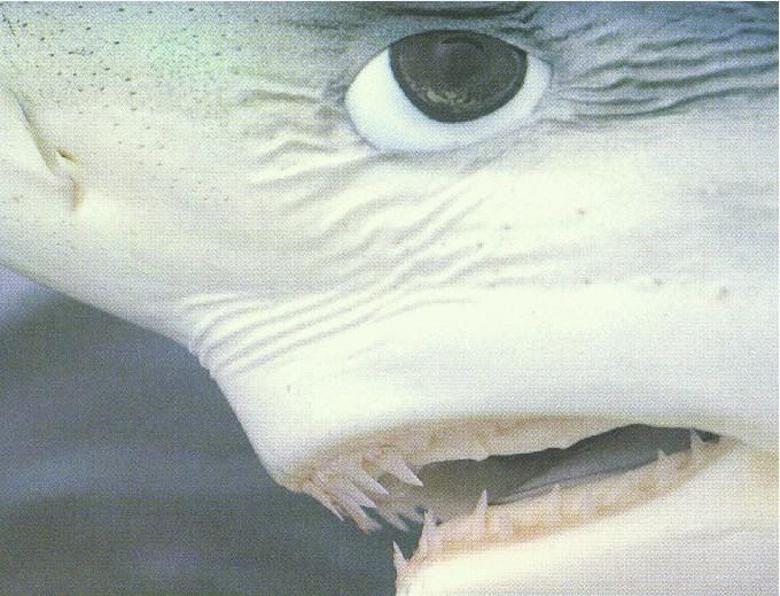
Shark eyes need to handle wide
water pressure variations, as they range from shallow to deep water
looking for food. The inner eye and retina have to compensate for
pressure differences on the eye’s outer surface. Their eyes
are relatively small for the overall size of their bodies. Since the
shark’s visual acuity has been sacrificed for more
sensitivity to low-light vision, it probably sees a lower resolution
image than humans.
(by Bruce Chambers) |
(P. 323, Readers Digest, Exploring the Secrets of Nature, 1994) |
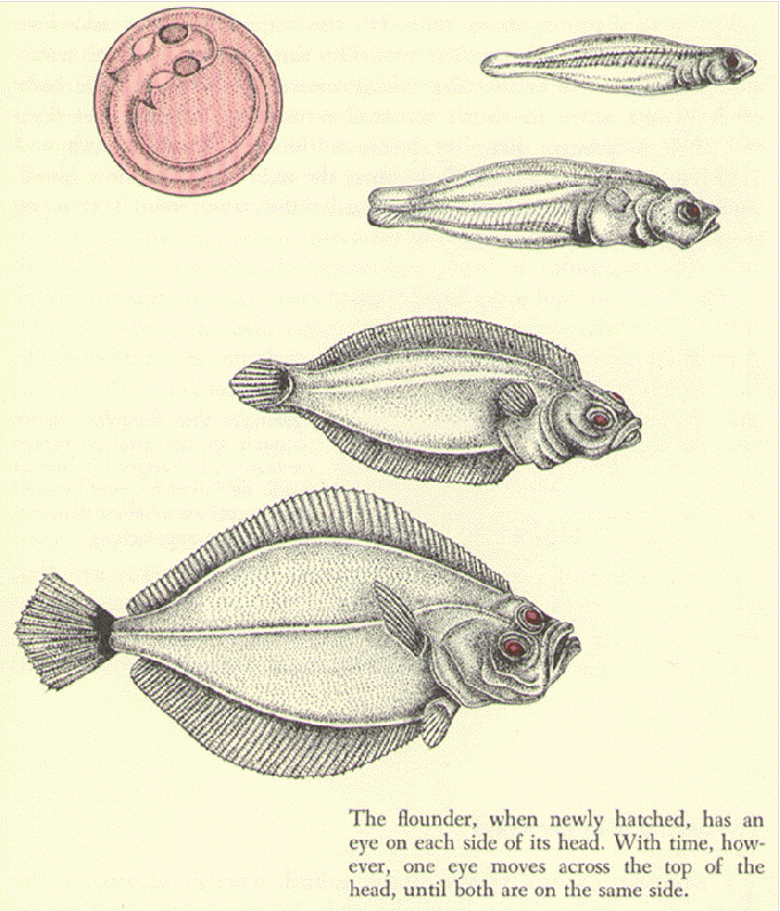
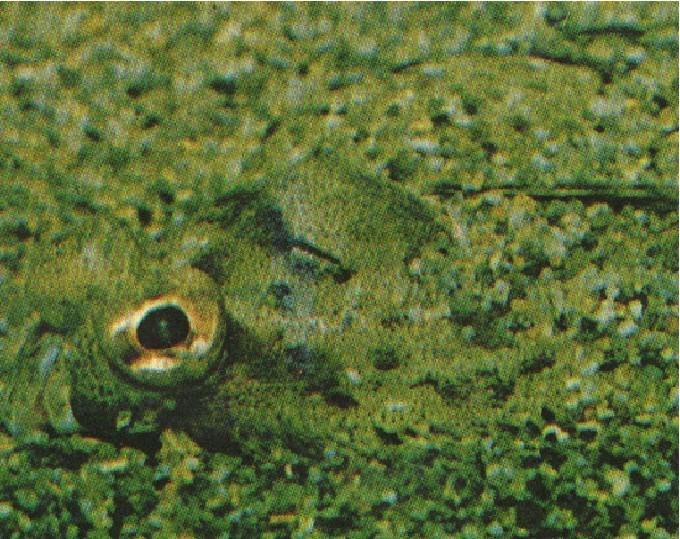
The eyes of the flounder have a unique placement. These flat bottom-dwelling fish frequently need to hide in the sand from predators. Since both of their eyes are on the same side of their bodies, they can watch for predators when they lie flat in the sand. This seems to be a fundamental feature of the flounder, but not at birth.
|
(Both figures from Pg. 61, Eyes Of Nature, National Audubon Society, 1968, Nelson Doubleday) |
3.
Four-eyed fish
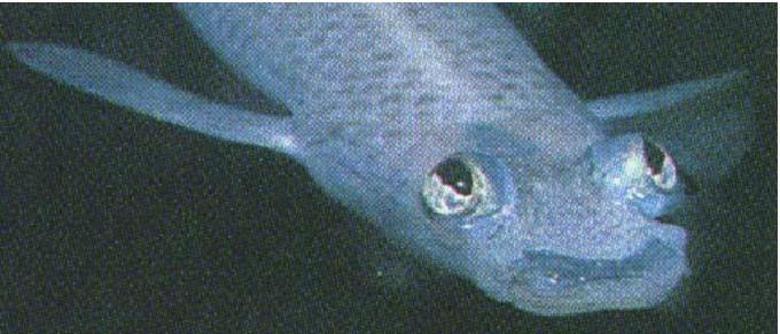
The four-eyed fish
has a unique eye configuration. Each eye lens has one facet for looking
out of the water and another for seeing in it. This complex eye lens
can focus two images simultaneously from above and below the water so
it is called a four-eyed fish. These fish eyes are large and bulging,
like those of a frog. Because it can see out of the water, it is
difficult for fishermen
to catch this fish.
|
The complex
processing requirements;for the brain from the four images, coupled
with its elegant optical design, make it easy to believe that the eyes
of this fish were specifically designed. (P. 324, Readers Digest, Exploring
the Secrets of Nature, 1994)
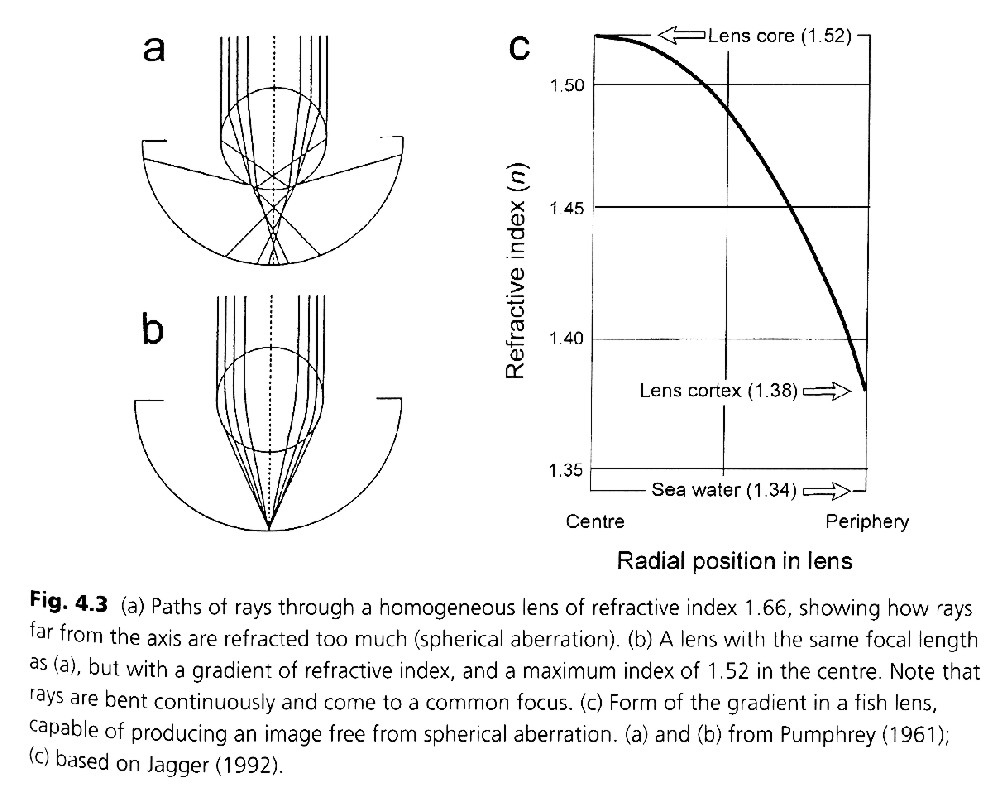
Figure 3.28a gives us an idea as to the actual complexity of some Eyes that may appear to be fairly simple designs. Gradient index is used in many insect, animal, and probably in human eyes. This correction afforded by gradient index can allow a wider clear field of view with fewer optical elements. (Reference: Figure 4.3, p. 59, Animal Eyes, Michael F. Land, Dan-Eric Nilsson, Oxford Animal Biology series, Oxford University Press, 2002- Please see their book for more details ) Figure 3.28b illustrates elegant design of an aquatic Eye. Such designs are somewhat consistent with contemporary optical design where considerable optimization issues to create very effective vision systems. (Reference: Figure 4.10, p. 69, Animal Eyes, Michael F. Land, Dan-Eric Nilsson, Oxford Animal Biology series, Oxford University Press, 2002- Please see their book for more details) |
Of Fish Gradient Index" 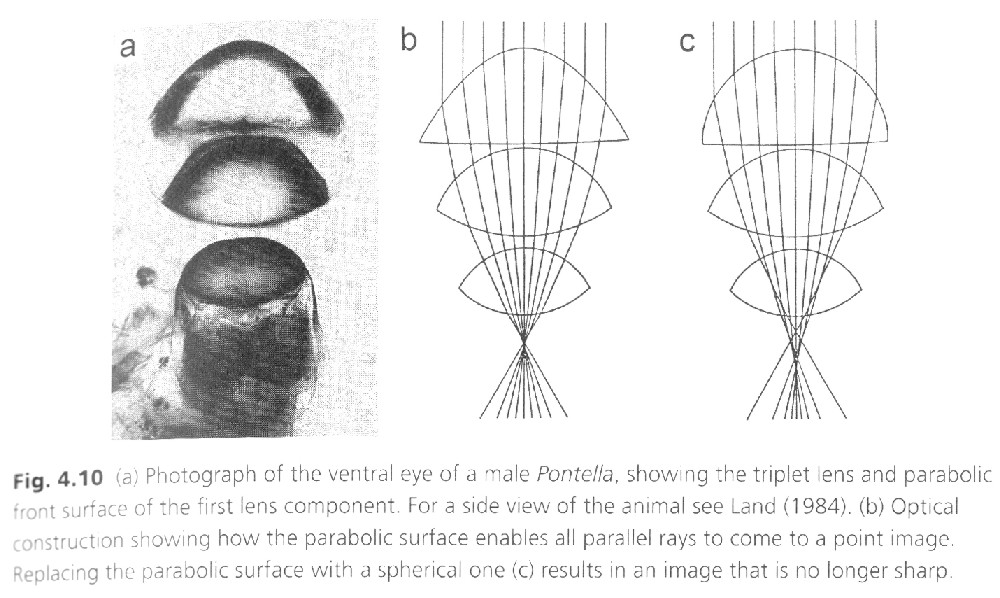
|
