lined link to go to subject)
 - Contents
Chapter 1. Vision
System Design
Chapter 2. Biological Eye Designs
Chapter 3.
Eye
Design
Illustrations
A.
Plant
light sensing
1.
Grass, simple vines,
and stems
2.
Flowers
B.
Lower
animal eyes
1.
Flatworms
2.
Clams and Scallops
3.
Nautilus
4.
Shrimp
5.
Crab
6.
Octopus and
giant squid
7.
Spiders
8.
Scorpions
8.
Brittle Star
C.
Insect
eyes
1.
Bees
2. Dragonflies
3. Butterflies
4.
Flies
5.
Ants
6.
Moths
7.
Beetles
8.
Wasp
D. Fish
eyes
1.
Shark
2.
Flounder
3.
Four-eyed fish
E.
Amphibian
eyes
1. Frog
2.
Salamander
F.
Reptile
eyes
1. Boa
constrictor
2.
Rattle
snake
3.
Lizard
4.
Turtle
5.
Crocodile
and
alligators
G. Bird
eyes
1.
Eagles
2.
Hummingbirds
3. Owls
4.
Ostrich
5.
Cormorants
H.
Mammal
eyes
1.
Whales
2.
Elephants
3. Lions,
tigers, and
other cats
4.
Monkeys
5. Rats
and mice
6. Bats
7.
Tarsier
I.
Human
eyes
1. Iris
2. Lens
3.
Retina
Chapter
4. Eye
Reproduction
Chapter
5. Optical
Systems
Design
Chapter
6. The Eye Designer
Related
Links
Appendix
A - Slide Show & Conference Speech by Curt Deckert
Appendix
B - Conference Speech by Curt Deckert
Appendix
C - Comments From Our Readers
Appendix
D - Panicked Evolutionists: The Stephen Meyer Controversy
Chapter 3
Section G
- Prev Page
Go
to Chapter Links
-  Next Page
-
Next Page
- 
(Click on PICTURE IN TEXT to bring up LARGE PICTURE)
3. EYE DESIGN ILLUSTRATIONS
G.
Bird eyes
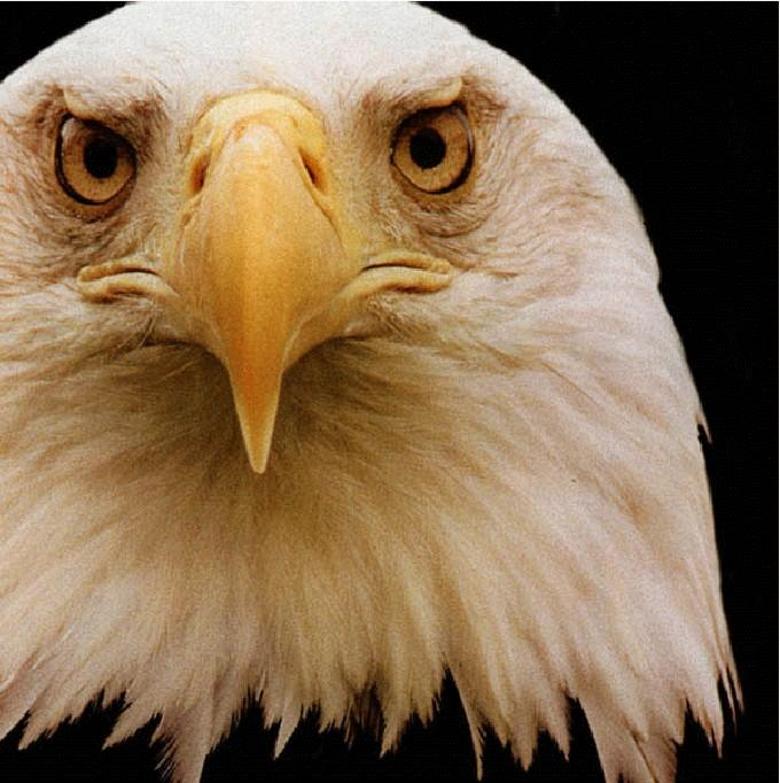
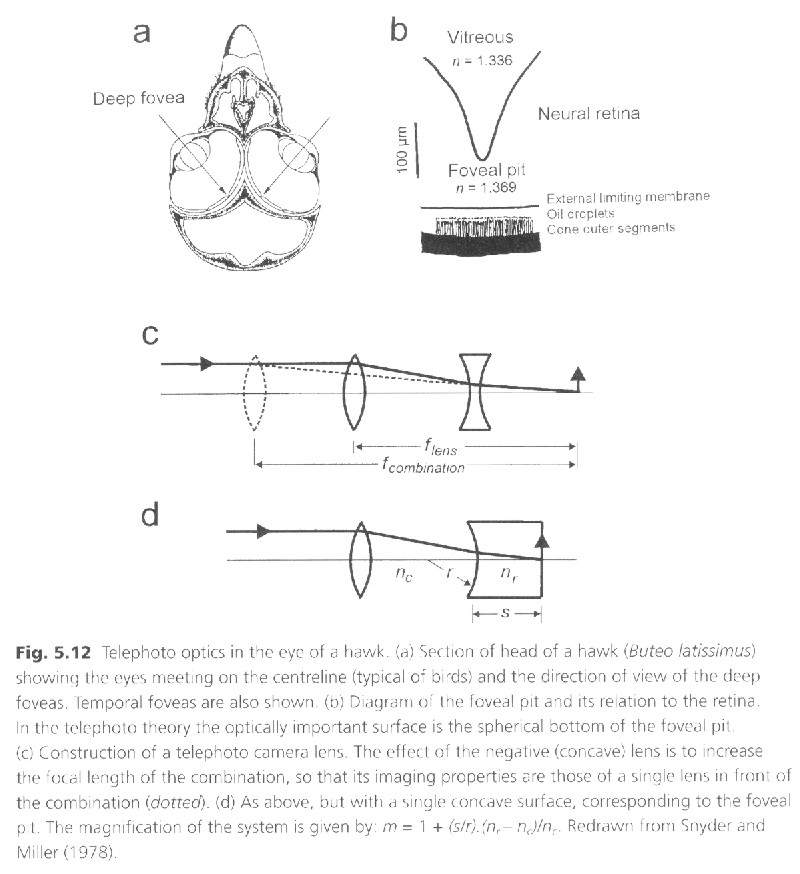
Birds need more
complex vision systems than many land animals. Some birds use the sun
and maybe even star patterns to navigate. Some bird eyes provide very
good distant vision. Large hunting birds, such as vultures, can spot an
animal carcass from 3,000 or 4,000 meters. Eagles may see a fish or
evidence of a fish at the same distance. At that height, most humans
cannot even see the bird. Most birds are far-sighted, and accommodation
of the eye is superior to most eyes mentioned so far. Of all the larger
animals, birds have the highest density of photoreceptors. For example,
the eyes of the hawk have 1 million photoreceptors per square
millimeter. This is a higher density than many of the CCD image
detectors used in today’s video cameras. Smaller sparrow eyes
have 400,000 photoreceptors per square millimeter, double the density
of photoreceptors in the larger human eye.
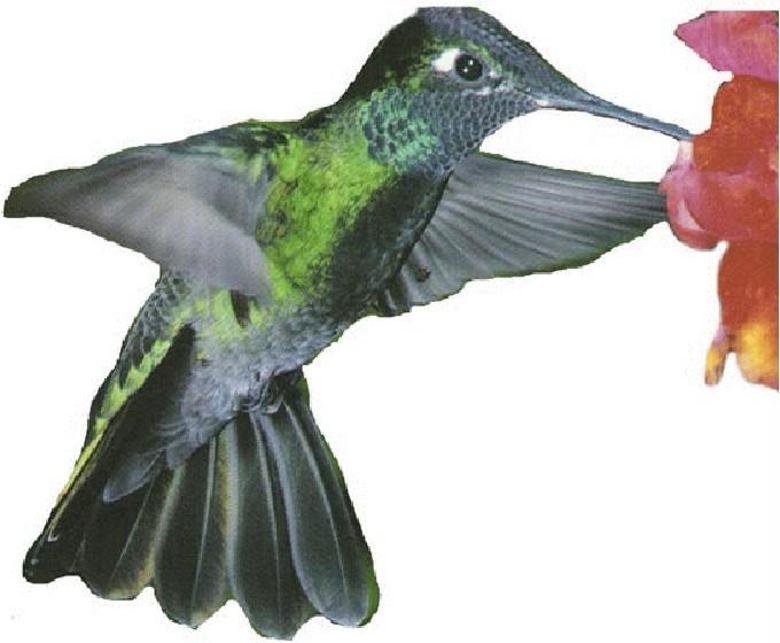
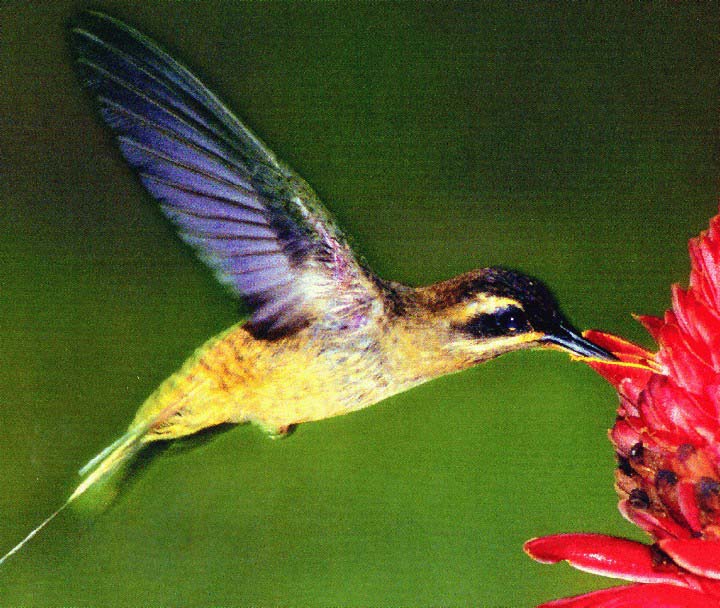
Hummingbirds can see flowers at a distance and very small parts of a flower at close range. This indicates they have good focusing ability for near and far objects. They probably have extended UV spectrum color vision like insects, as well as vision to sense polarized light. Their brain has the ability to control three-dimensional navigation and coordinate rapid movements of their wings to their eyes, so they can take full advantage of their eyesight. (P. 185, Readers Digest, Exploring the Secrets of Nature, 1994)
|
|
Owls locate their target or meals with their precise directional sensing using the difference of the time it takes for sound to reach each of their two ears. They then turn their eyes to the direction from which the sound originated. Owls learn to do this while quite young. However, as they grow, the capability has to be modified as the ear separation grows. Here there must be some special compensation, in the brain, indicating intelligence to compensate for increasing ear separation.
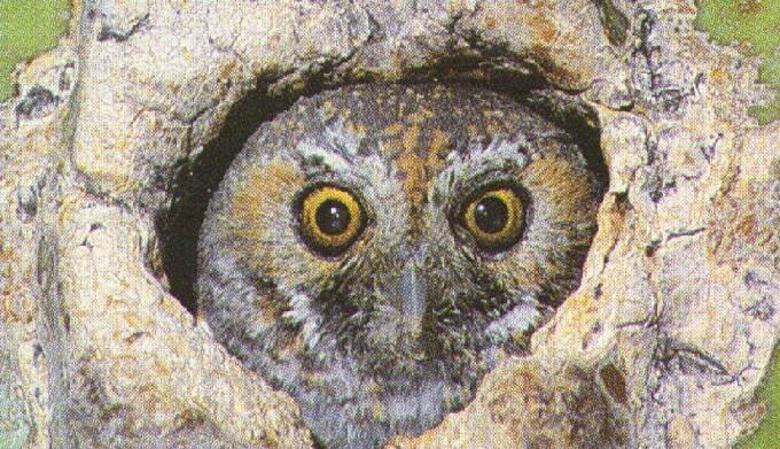
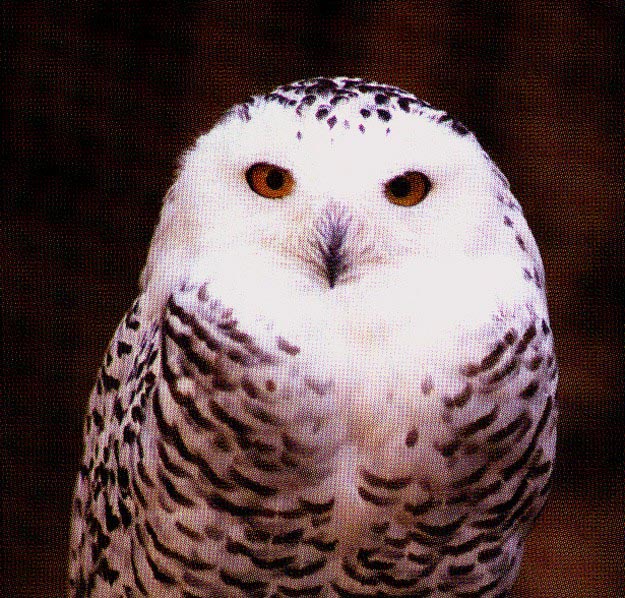
Owls have sensitive eyes for hunting at night, they tend to have a large aperture (large NA or small f/number) eye. large for their overall body size. Owl eyes do not rotate as much as human eyes do, but an owl's head can turn a considerable angle to accomplish the same purpose. They also have good stereo vision and depth perception because of the owl's eyes being separated by a significant distance. (Fig. 3.40 from P. 93, Readers Digest, Exploring the Secrets of Nature, 1994 and fig. 3.41 adapted from p. 105, fig 40 Vision in the Animal World, R. H. Smythe, Macmillan Press, 1975)
|
|
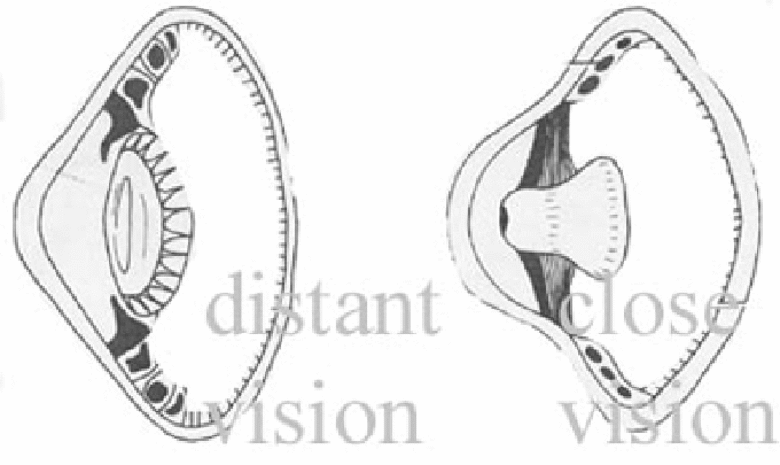
section of Owl Eyes to illustrate capability to Focus |
|
|