(Click on underlined
link to go to subject)
 - Contents
Chapter 1. Vision System Design
Chapter 2.
Biological Eye
Designs
Chapter 3. Eye
Design Illustrations
Chapter 4. Eye
Reproduction
Chapter 5. Optical Systems Design
Chapter 6. The
Eye Designer
Related Links
Appendix A --
CRIS Speech & SlideShow by Curt Deckert
Appendix B - RAPID Speech by Curt Deckert
Appendix C - Comments From Our Readers
Appendix
D - Panicked Evolutionists: The Stephen Meyer Controversy
Chapter 6
Section B
- Prev Page
Go
to Chapter Links
-  Next Page
-
Next Page
- 
(Click on PICTURE IN TEXT to bring up LARGE PICTURE)
6. THE EYE DESIGNER
B.
Eye integration design evidence
1.
Eye integration with brain
Human eyes are just one
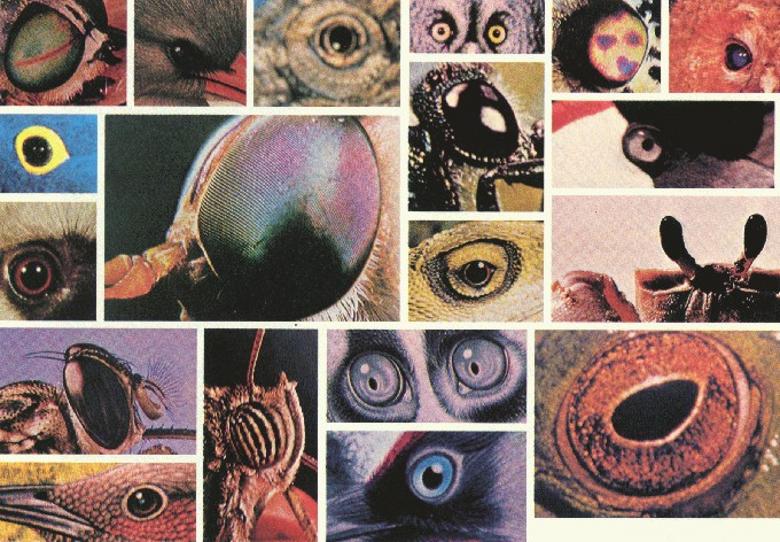
example of very creative optical system design. All of natures eyes
illustrate the result of applying intelligent design to achieve vision.
. If you believe that the white fly or any animal was created, then it
follows that everything else was created The eye's integration with the
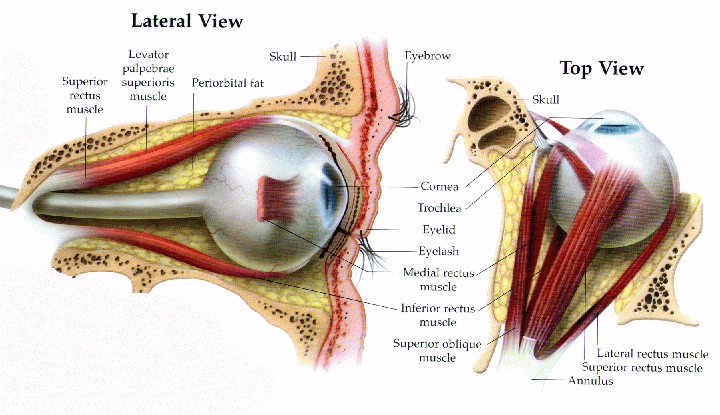
brain and the remainder of the body requires thousands of communication
lines connecting each of many types of cells to function as a vision
system. Some nerve cells may have more than 10,000 lines of
communication with other cells! The size of these communication fibers
or small tubes may be less than .010 micron in diameter. Such fibers
are even smaller than we can see with most conventional microscopes
where, under ideal conditions, we may be able to see 0.2- micron
details. Special UV microscope systems may enable one to see detail
smaller than 0.1 micron and UV laser scanning microscopes can allow
resolution on the order of .02 micron. UV is used to excite
fluorescence to selectively make many active lines of communication
between cells visible. If this advanced cell integration and
communication evidence had been known in 1850, it is probable that most
educated people would not pay much attention to present evolutionary
theories. It would seem that today, having well over 1000 times the
technical knowledge available in 1850, we should have more objective
ideas about the origin of vision. I doubt that Darwin would go along
with his followers of today.
2. Eye integration with
other parts of body
Eyes, larger in proportion to
body size, are more difficult to integrate into a creature in terms of
weight, volume, brain size requirements, and the overall need for
energy. Ideally, larger eyes and brains have the ability to process and
store more data. Smaller eyes provide input for difficult high-speed
image processing, but smaller brains probably have less long-term
memory and learning abilities.
3. Integrated vision growth
DNA programs cells before
birth to generate specific materials for eyes as growth takes place.
Plants, animals, insects, humans, air, water, and land are all
interrelated, with programmed information that appears to have come
from specific designs. The usefulness of vision to many body functions
and activities is apparent to all of us. This is especially evident as
we learn how optic system cells grow, along with communication and
brain cells, to make up useful integrated vision systems. There is
certainly evidence of intelligent programming in the precise way
reproduction is orchestrated in the many different types of eye cells.
Many cell messages for vision systems must be coordinated within the
brain of each type of creature.
Growth of eye cells requires
complex molecules, such as DNA and RNA. DNA stores genetic information,
which is in effect a design blueprint for cells. RNA molecules
transport the correct blueprint information to the correct cell
building site made up of complex proteins. Eye cells cannot function
without RNA and DNA. New eye cell generation requires that all these
functions be in place. Some scientists say that originally RNA could
function alone, but this is highly unlikely with early earth high
temperatures. Accurate cell production is required to preserve the
long- term functions of the RNA. Focused overall design effort was
necessary for overall cell location, integration and communication to
take place.
4. Embedded programming
of automatic vision
functions
The interaction and construction of RNA and DNA molecules in cells play
key roles in the reproduction of eyes. It is expected that significant
knowledge is stored in cells and in well-designed databases within the
brain. The variability and constraints of the DNA code provide a
framework indicating a well-planned reproducible design. The programmed
reproduction of eye cells should be evidence enough for proving
intelligent design.
The vision systems of insects,
animals, and humans all integrate programmed or automatic eye functions
and learned responses. For example, programming for gathering and
saving food from one season to another depends on eyes for key inputs
and the brain for overall control of the vision system. Spiders need to
have enough intelligence and visual resolution to build webs, trap
food, and to recognize danger. Control functions and programming
involving some type of intelligent reference is also necessary to
interpret environmental changes such as temperature, seasons, light,
and darkness for all kind of creatures.
It appears certain instincts
involve programming of vision functions. These occurred in all of
creation and each species of animal, each with a specific eye design
having different DNA programming. Built-in intelligence is required for
whales, geese, butterflies and other creatures that travel long
distances. Here intelligence for viewing stars, days, nights and other
references is required for navigation. This requires integration of the
eyes with a brain containing initial control information and the
ability to learn all they need to know by communication with other
creatures. All of this is required for vision in all sizes of animals.
Even small butterflies, having long migration paths, must have some
embedded or programmed information. For example, Monarch butterflies,
having never made the trip before, must have some information or when
and where to start. When we look at the huge database of optical
information necessary to describe eye optics and vision for all
existing creatures, we can easily become overwhelmed. It may help to
visualize our vision system like a computer system, where the program
is the key element in coordinating and reasoning.
Where did eye software design
come from?
How did such elegant eye designs develop over such a short period of
time?
5. Using vision
integration technology to
control animals as robots
The overall cost is high for
developing man-made, non-reproducing vision systems similar to those
found in small, medium, and large animals. This increases the
possibility of using vision integration technology by training animals
and/or insects. There is also the possibility of replacing or
supplementing very small robotic systems instead of building complete
robots. Big animals, such as elephants or horses, are already used on a
large scale for work all over the world. We should be able to control
very small living creatures, much like dogs are trained to aid the
blind. Since they have less apparent reasoning power to resist training
it would seem to be feasible.
For example, if communication
methods are developed to utilize insects, they can be trained to go
into places which larger animals cannot go. Work has started in this
area with the remote control of cockroaches carrying special
surveillance packages. If their vision and control systems could be
manipulated and monitored, insects could be used for weapons of war
against physical targets, for carrying out selective medical surgery by
cleaning wounds and removing specific tissue, and for other limited
access applications. As we learn to communicate with insects and other
small animals such as leeches and gain access to their vision and
recognition systems, we may learn to monitor their vision and control
them with respect to what they see.
There are many potential
robotic and instrumentation applications for very small insect type
eyes if we can learn more about these small vision systems. Here,
insects could be great caregivers, in that they could gather tissue
samples or deliver drugs to specific sites, sense the need for
medication, and provide a means of monitoring hard-to-reach organs.

